
If your gas is off, a standard gas tank water heater will still supply hot water for 1 to 3 hours from the water already stored in the tank. Once that stored water cools down, no new hot water can be produced until the gas supply is restored and the pilot light is relit. Gas tankless heaters stop working immediately with no stored reserve. Electric water heaters are not affected at all.
Introduction
Waking up to ice-cold water is one of those moments that immediately demands answers. The most common question people search in a panic: if my gas is off will I still have hot water?
The honest answer depends entirely on what type of water heater sits in your home. A gas tank heater gives you a short window of warm water from its insulated storage. A gas tankless heater cuts off immediately. An electric heater keeps running without any interruption at all.
This guide covers every water heater type, explains the science behind why hot water disappears (or doesn’t), and gives practical steps to manage the situation from the moment the gas shuts off to the moment it comes back on.
How Your Water Heater Type Determines Everything
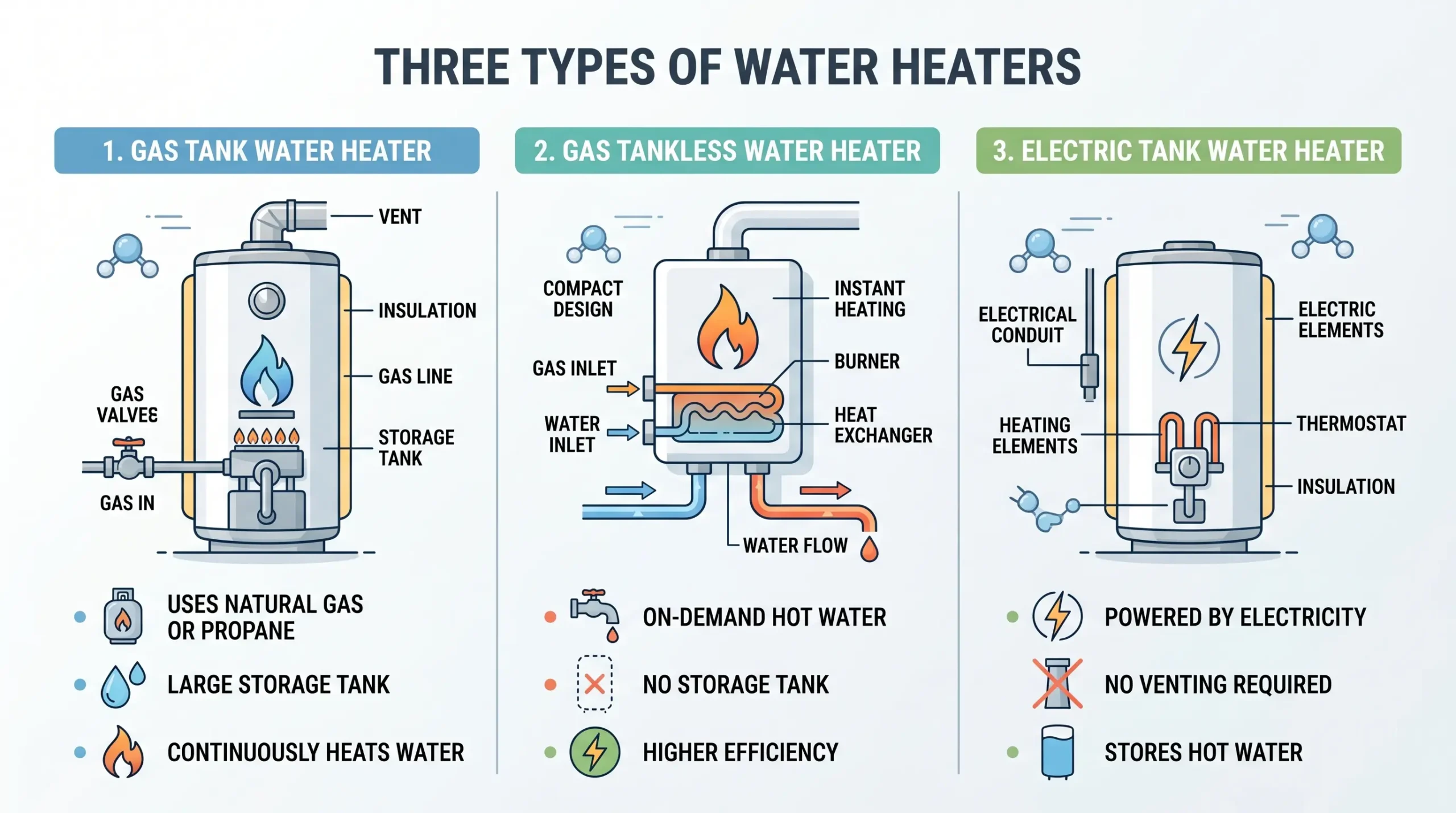
The first thing to check is what kind of water heater your home uses. This single factor controls everything about how a gas shutoff affects your hot water supply.
| Water Heater Type | Fuel Source | Hot Water When Gas Is Off? | Duration |
|---|---|---|---|
| Gas Tank | Natural gas / Propane | Yes — stored water only | 1–3 hours |
| Gas Tankless | Natural gas / Propane | No — stops immediately | 0 minutes |
| Electric Tank | Electricity | Yes — fully unaffected | Normal operation |
| Electric Tankless | Electricity | Yes — fully unaffected | Normal operation |
| Heat Pump Water Heater | Electricity | Yes — runs normally | Normal operation |
| Solar (electric backup) | Solar + electricity | Yes — backup runs normally | Normal operation |
| Solar (gas backup) | Solar + gas | No — backup stops | 0 minutes from backup |
| Indirect (boiler-fed) | Gas through boiler | No — boiler needs gas | 0 minutes |
Key takeaway: If you have a gas tank heater, you have a short buffer. If you have a gas tankless or indirect heater, hot water stops with the gas.
What Actually Happens Inside a Gas Water Heater When Gas Stops
Understanding the mechanics makes the situation easier to manage.
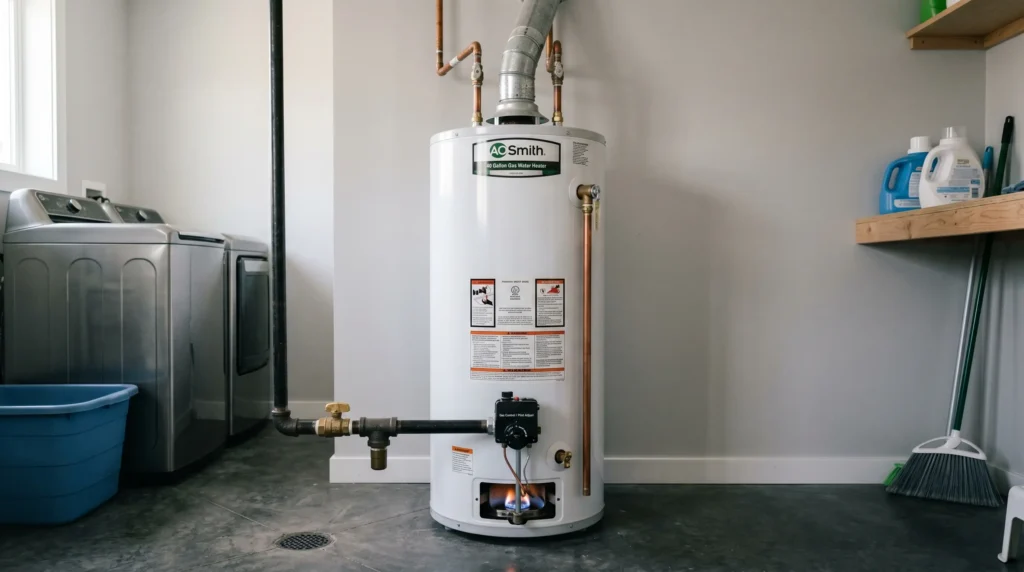
A gas tank water heater keeps 30 to 80 gallons of water heated to your thermostat setting (typically 120°F). Here is how the system works under normal conditions:
- Cold water inlet: Fresh water enters the bottom of the tank continuously
- Gas burner: A burner underneath the tank heats the water upward
- Pilot light: A small flame burns constantly (in older models) and ignites the main burner when water temperature drops
- Thermocouple: A safety device that detects whether the pilot light is lit and shuts off gas if it is not
- Flue pipe: Routes combustion exhaust safely outside the home
- Insulated tank walls: Thick insulation keeps heated water warm without constant burner activity
- Hot water outlet: Heated water exits from the top of the tank to your fixtures
When the gas supply is cut:
- The pilot light goes out within seconds
- The thermocouple detects no flame and closes the gas valve as a safety measure
- The main burner receives no gas and cannot fire
- Water already in the tank stays at its current temperature behind insulated walls
- Every time hot water is drawn out, cooler water enters from the bottom
- The burner cannot reheat that cool incoming water
- Over 1 to 3 hours, the tank temperature gradually drops to room temperature
The insulation does the heavy lifting during this window. Higher-quality tanks with better insulation ratings hold heat longer.
How Long Will Hot Water Last After Gas Is Turned Off?
Several factors control your hot water window:
Tank insulation quality: Newer tanks with higher energy-factor ratings keep water warmer longer. An older tank with degraded insulation may lose heat in under an hour.
Current tank temperature: If the water was freshly heated to 120°F right before the shutoff, you have the maximum buffer. If it had already partially cooled, the window is shorter.
How much hot water you use: Every gallon you draw from the tank pulls in cold replacement water from the inlet. Using hot water speeds up the cooling process significantly.
Ambient temperature: A water heater in a cold garage or basement loses heat faster than one in a heated utility closet.
Tank size: A 50-gallon tank holds more total thermal energy than a 30-gallon tank and therefore lasts longer.
Realistic Hot Water Duration Estimates
| Scenario | Estimated Duration |
|---|---|
| Newly heated 50-gal tank, minimal use, warm location | Up to 3 hours |
| Standard 40-gal tank, moderate use | 60–90 minutes |
| Older tank, heavy immediate use (showers, laundry) | 30–45 minutes |
| Gas tankless heater | 0 minutes |
Practical advice: If you know the gas is about to go off, let everyone shower immediately and avoid running the washing machine or dishwasher afterward. That preserves your stored hot water as long as possible.
Common Reasons Gas Gets Shut Off
Knowing why the gas shut off helps determine how long the interruption will last.
Unpaid utility bill: The utility company typically sends multiple notices before disconnecting service. Restoration after payment usually takes 24 to 48 hours.
Planned utility maintenance: Gas companies schedule line work and notify customers in advance. These outages are usually several hours and planned during low-demand periods.
Emergency shutoff by utility: Suspected leaks or damaged infrastructure trigger immediate shutoffs in affected areas. These can last anywhere from hours to days.
Appliance malfunction: A faulty valve or regulator on the water heater itself can interrupt gas flow even when the main supply is fine.
Homeowner shutoff: People often shut off gas manually when moving, renovating, or doing appliance work and forget to restore it.
Meter issues: A frozen regulator in cold climates or a failing meter can interrupt gas flow without the utility actively shutting it off.
Natural disaster or gas leak: Earthquakes, floods, or detected leaks in the neighborhood trigger automatic safety shutoffs.
Step-by-Step: How to Get Hot Water During a Gas Outage
Step 1: Confirm the Gas Is Actually Off
Before assuming a gas shutoff, check another gas appliance. Try a gas stove burner. If it lights normally, the problem is with the water heater specifically, not the gas supply.
If no gas appliances work, confirm by contacting your utility company. Their automated systems can confirm outages in your area within minutes.
Step 2: Check Your Water Heater Type
If you have an electric water heater, stop here — your hot water is not affected. Check your circuit breaker if hot water is still missing (a tripped breaker is the likely culprit).
Step 3: Use Stored Hot Water Wisely
If you have a gas tank heater:
- Prioritize showers and necessary washing immediately
- Avoid running the dishwasher or washing machine (they consume large volumes of hot water)
- Fill thermoses or insulated containers with hot water for later use
- Do not run taps longer than necessary
Step 4: Set Up a Temporary Hot Water Solution
Options that work without gas:
- Boil water on an electric stove and mix with cold water to desired temperature
- Use an electric kettle for handwashing and small tasks
- Place a portable immersion heater in a bucket (plugs into any standard outlet)
- Fill a solar shower bag and leave in direct sunlight (works well in summer)
Step 5: Contact Your Utility Company
Call the gas company to get an estimated restoration timeline. If the shutoff is due to non-payment, ask about same-day reconnection options after payment is processed.
How to Restore Hot Water After Gas Comes Back On
When the gas supply is restored, the water heater does not restart automatically. The pilot light went out and must be relit manually.
| Step | Action | Time Required |
|---|---|---|
| 1. Safety check | Smell for gas near the water heater and all connections | 2–3 minutes |
| 2. Ventilation | Open a nearby window to clear any accumulated gas | 5 minutes |
| 3. Wait | After smelling any gas, wait 10 minutes before approaching the heater | 10 minutes |
| 4. Gas valve | Turn the main supply valve back to the ON position | 30 seconds |
| 5. Pressure stabilization | Allow gas lines 5 minutes to pressurize and clear air pockets | 5 minutes |
| 6. Pilot light | Follow the manufacturer label on the heater to relight the pilot | 2–5 minutes |
| 7. Thermostat | Confirm temperature setting is at 120°F | 30 seconds |
| 8. Burner confirmation | Listen for the burner to ignite when thermostat calls for heat | 1–2 minutes |
| 9. Heating period | Allow 30–60 minutes for full tank to reach set temperature | 30–60 minutes |
| 10. Test | Run a hot water tap to confirm adequate temperature | 2 minutes |
| 11. Monitor | Check for unusual smells, sounds, or drips over the next 24 hours | Ongoing |
Important: If you smell gas at any point during this process, do not attempt to light the pilot. Leave the home immediately and call the gas company from outside or a neighbor’s phone.
How to Relight a Pilot Light (Standard Process)
Most gas water heaters follow this sequence, though always check the label on your specific unit:
- Turn the gas control knob to the OFF position
- Wait at least 5 minutes for any residual gas to dissipate
- Turn the knob to the PILOT position
- Press and hold the pilot button (or gas control knob, depending on model)
- While holding, use a long lighter or igniter button to light the pilot flame
- Continue holding the button for 30 to 60 seconds after the flame appears
- Slowly release the button and confirm the pilot stays lit
- Turn the knob to the ON position and set the desired temperature
If the pilot will not stay lit after several attempts, the thermocouple may need replacement. This is a small, inexpensive component that any licensed plumber can replace in under an hour.
Alternative Hot Water Sources During a Gas Shutoff
When the stored water runs out and the gas is still off, these options keep things functional:
Electric stovetop or hot plate: Boil a pot of water and mix it with cold water in a basin or bucket to the right temperature for bathing or washing dishes. This works well for smaller households.
Electric kettle: A standard kettle heats about 1.5 liters in 3 to 4 minutes. Useful for handwashing, cleaning, and making warm water for babies or pets.
Portable immersion heater: A coil-type immersion heater (available at hardware stores for $15 to $30) submerges in a bucket and heats water in about 15 minutes. It plugs into a standard 120V outlet.
Solar shower bags: Black plastic bags sold for camping absorb sunlight and heat 5 gallons of water to 100–110°F on a sunny day. Free to operate once purchased.
Gym or community center: Many gyms offer day passes. A hot shower there costs far less than a day of frustration at home.
Neighbor or family member: The simplest option if the outage is short-term.
Propane camping shower: A portable propane-heated shower system provides full hot water without any grid connection. Effective for extended outages.
Mistakes to Avoid When Gas Is Off
Running hot water without a purpose: Every gallon drawn from the tank during a shutoff shortens your hot water window. Be intentional about use.
Trying to manually bypass the gas supply: Do not attempt to connect external gas sources to household appliances without professional help. This creates serious explosion and carbon monoxide risks.
Forgetting to relight the pilot light: Many people restore the gas, wait an hour, and still have cold water because they did not relight the pilot. The burner cannot operate without it.
Draining the tank unnecessarily: Unless the gas will be off for more than a month, there is no reason to drain the tank. Draining creates more work and introduces air into the system.
Ignoring a gas smell after restoration: If you smell rotten egg odor (the sulfur added to gas as a safety odorant) after the gas is restored, do not relight anything. Leave immediately and call the gas company.
Using a gas generator indoors: If you use a generator during an extended outage, it must operate outside only. Carbon monoxide from generators kills.
Assuming the problem is the gas shutoff: If hot water disappears but the stove still works, the issue is the water heater itself, not the gas supply. Check the pilot light, thermocouple, and gas valve at the appliance.
Myths vs. Facts About Gas Shutoffs and Hot Water
| Myth | Fact |
|---|---|
| Turning off gas damages the water heater | Short-term shutoffs cause no damage. Issues only arise after months of inactivity. |
| Hot water will last all day from the tank | Realistically 1–3 hours depending on use and tank size. |
| The pilot light relights itself when gas returns | The pilot must be manually relit every time. |
| Electric water heaters also stop when gas is off | Electric heaters run entirely on electricity and are completely unaffected. |
| You can smell if gas is leaking | Only if a sufficient amount is present. Small leaks may not be detectable by smell alone — carbon monoxide detectors and gas detectors provide better protection. |
| A gas shutoff means all appliances stop working | Only gas appliances stop. Electric appliances, including electric water heaters, continue normally. |
| Tankless water heaters store some water for emergencies | True tankless heaters have zero storage. They heat only on demand and stop working the moment gas is cut. |
Prevention Tips to Reduce Impact of Future Shutoffs
Planning ahead for gas interruptions costs very little and makes the difference between a manageable inconvenience and a genuinely difficult day.
Insulate your water heater tank: A pre-cut insulation blanket costs $20 to $30 and significantly extends how long stored water stays warm during a shutoff.
Insulate hot water pipes: Foam pipe insulation reduces heat loss throughout the plumbing system, keeping water warmer longer once it leaves the tank.
Post relight instructions: Print the pilot light relighting steps from your water heater’s manual and tape them to the unit. In a stressful moment, having the steps in front of you saves time.
Save the utility company’s emergency number: Store it in your phone now. Gas company emergency lines are separate from the billing number and often have shorter wait times.
Sign up for utility outage alerts: Most gas companies offer text or email alerts for planned and unplanned outages in your service area.
Schedule annual water heater maintenance: A plumber or technician can check the thermocouple, gas valve, anode rod, and burner annually. Catching issues early prevents mid-winter failures.
Install a carbon monoxide detector: Place one within 10 feet of the water heater. CO detectors cost $20 to $40 and provide critical safety coverage during and after gas work.
Consider an electric backup option: A small electric kettle or immersion heater stored in a cabinet costs under $30 and covers most hot water needs during a short outage.
Expert Tips
From troubleshooting experience: The most common cause of hot water loss that people mistake for a gas shutoff is actually a dead pilot light unrelated to gas supply. Before assuming the gas is off, check whether your stove or another gas appliance is working.
Tank temperature matters more than people realize: Setting your water heater to 120°F (not higher) is the recommended safe temperature. Higher settings waste energy but do not meaningfully extend your hot water window during a shutoff — the extra heat adds very little thermal mass.
During extended outages (over 2 weeks): Drain the tank to prevent sediment from settling heavily at the bottom. Flush it before restarting to clear any stale water smell. This is a 30-minute task that protects the tank’s lifespan.
Thermocouple replacement is cheap and fast: If your pilot light will not stay lit after the gas is restored, a faulty thermocouple is the most likely cause. The part costs $8 to $20 at any hardware store. A plumber can replace it in 30 to 45 minutes. It is one of the most common and least expensive water heater repairs.
Check the pressure relief valve after extended shutoffs: The T&P valve (temperature and pressure relief valve) is a critical safety device. After any extended outage, verify it is not stuck or corroded. A plumber can test it during an annual service visit.
People Also Ask
Will a Gas Tankless Water Heater Work If the Gas Is Off?
No. Gas tankless water heaters heat water on demand using a gas burner that fires only when a tap is opened. There is no storage tank to fall back on. The moment the gas supply is cut, the heater produces no hot water at all — the loss is immediate.
How Do I Know If My Water Heater Is Gas or Electric?
Check the energy source connection at the heater. A gas water heater will have a gas line (typically a flexible metal connector or rigid pipe) running to the unit and a flue pipe at the top or side for exhaust venting. An electric water heater will have an electrical conduit or wiring running to it and no flue pipe.
Can I Use My Gas Water Heater If the Power Goes Out?
Most traditional gas tank water heaters with a standing pilot light continue to operate during a power outage because they do not require electricity to ignite or run the burner. However, newer gas water heaters with electronic ignition systems may need electricity to light and operate. Check your model’s specifications or the label on the unit.
How Long Does It Take for Hot Water to Return After Gas Is Restored?
After relighting the pilot light, a standard 40-gallon gas tank water heater takes approximately 30 to 40 minutes to heat a full tank from cold. A 50-gallon tank typically takes 40 to 60 minutes. Set the thermostat to your desired temperature and allow the full heating cycle to complete before expecting consistent hot water.
Is It Safe to Leave a Gas Water Heater Off for Several Weeks?
Yes, short-term inactivity does not damage the water heater. For absences of a week or two, simply turn the thermostat to the VACATION setting (available on most models) rather than shutting off the gas entirely. For absences longer than one month, drain the tank, turn off the cold water supply, and shut off the gas at the appliance valve.
What If My Pilot Light Will Not Stay Lit After the Gas Comes Back?
If the pilot flame goes out immediately when you release the control button, the thermocouple is likely faulty. The thermocouple is a small safety sensor that signals the gas valve to stay open when a flame is detected. When it fails, the valve closes and the pilot cannot stay lit. Replace the thermocouple — it is an inexpensive fix.
FAQ
If my gas is off will I still have hot water from an electric heater?
Yes, completely. An electric water heater runs on your home’s electrical supply and has no connection to gas service. A gas shutoff does not affect it in any way. Your hot water supply from an electric heater will be normal during any gas outage.
Will the hot water heater be damaged if gas is off for a few days?
No. A gas water heater handles short-term inactivity without any damage. The pilot light goes out, the burner stops, and the tank simply sits idle. Once the gas returns and the pilot is relit, the heater resumes normal operation. Damage from inactivity only becomes a concern after several months of sitting unused.
If my gas is off, will I still have hot water for a shower?
Likely yes — for one or possibly two showers, depending on tank size. A standard 40-gallon tank supports roughly two 8-minute showers. If the gas just shut off and the tank was freshly heated, the first people to shower will have warm to hot water. Later showers will be increasingly cool as the tank temperature drops.
Can I heat water with gas turned off?
Not using the gas water heater, but yes using other methods. An electric stove, electric kettle, or portable immersion heater all work without gas. Solar shower bags work using sunlight. A camping stove with a propane canister can also heat water, but must be used outdoors only.
How do I prevent sediment buildup if the gas is off for a long time?
Drain the tank if the gas will be off for more than four to six weeks. Connect a garden hose to the drain valve at the bottom of the tank, run it to a floor drain or outside, open the valve, and allow the tank to empty fully. This prevents sediment from compacting at the bottom and causing efficiency problems when service resumes.
If my gas is off will I still have hot water from a heat pump water heater?
Yes. Heat pump water heaters run entirely on electricity. They extract heat from the surrounding air and transfer it to the water in the tank. They are completely unaffected by gas shutoffs and will operate normally regardless of whether gas service is active.
Key Takeaways
- Gas tank water heaters provide 1 to 3 hours of hot water from storage after the gas shuts off, then stop entirely
- Gas tankless heaters stop producing hot water immediately — there is no storage buffer
- Electric water heaters (tank, tankless, or heat pump) are completely unaffected by gas shutoffs
- The pilot light must be manually relit after gas service is restored — it does not restart automatically
- Short-term gas shutoffs (days to weeks) do not damage the water heater
- You can get temporary hot water using an electric stove, electric kettle, or portable immersion heater
- If you smell gas after the supply is restored, leave the building and call the gas company before lighting anything
Conclusion
If your gas is off, whether you still have hot water comes down to one thing: what kind of water heater your home uses.
Gas tank owners get a short window — typically 1 to 3 hours — from the water already stored in the insulated tank. Gas tankless heater owners lose hot water immediately. Electric heater owners have nothing to worry about during a gas shutoff.
The most important practical steps are to use stored hot water wisely during the outage, set up an electric alternative for longer interruptions, and follow the proper pilot light relighting procedure once gas service is restored.
Knowing where your gas shutoff valve is, having the utility company’s number saved, and keeping an electric kettle in the cabinet are small preparations that make gas interruptions far easier to manage.